Launchers
Current Launchers
SSLV
PSLV
GSLV
LVM-3
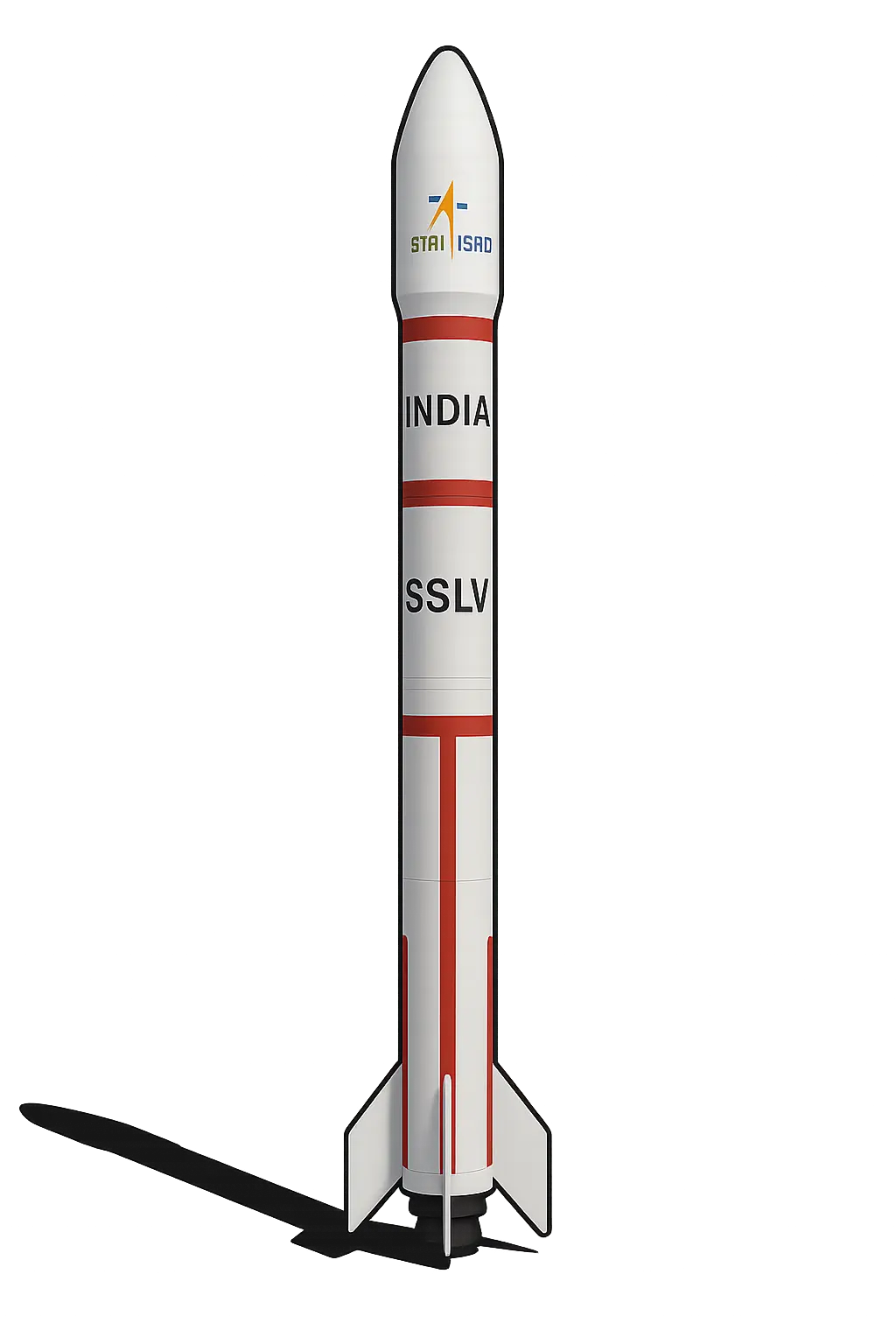
SSLV
The SSLV (Small Satellite Launch Vehicle) is a new launch vehicle developed by ISRO to cater to the growing demand for small satellite launches. It is designed to provide quick and cost-effective access to space for small payloads.
First Flight: 2022
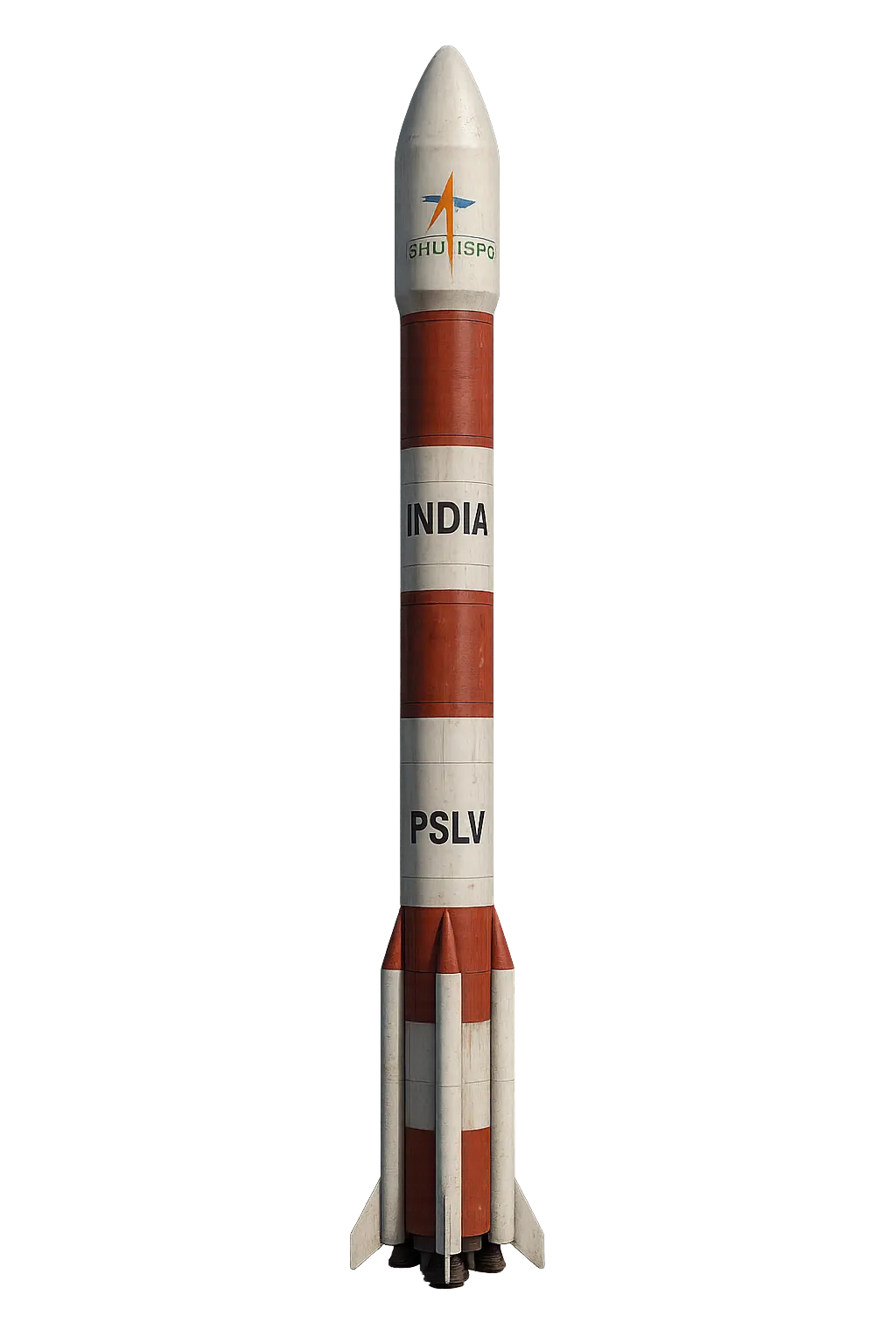
PSLV
The PSLV (Polar Satellite Launch Vehicle) is one of ISRO’s most successful and reliable launch vehicles. Known for its versatility, it is capable of launching satellites into Sun-synchronous, polar, and geostationary orbits. PSLV has also carried out international commercial missions and interplanetary launches.
First Flight: 1993
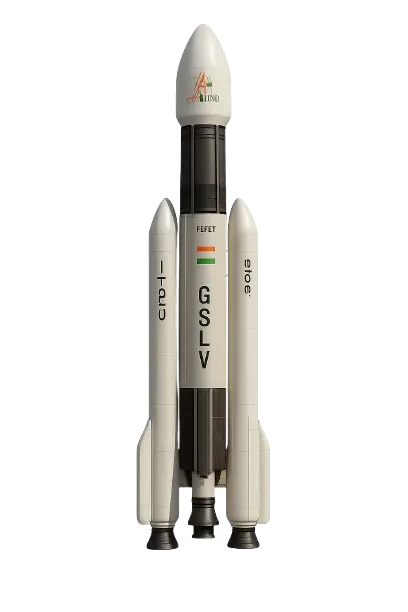
GSLV
The GSLV (Geosynchronous Satellite Launch Vehicle) is ISRO's medium-lift launch vehicle designed to deploy satellites into geostationary orbits. It uses a combination of solid, liquid, and cryogenic propulsion stages and plays a crucial role in launching communication and weather satellites.
First Flight: 2001
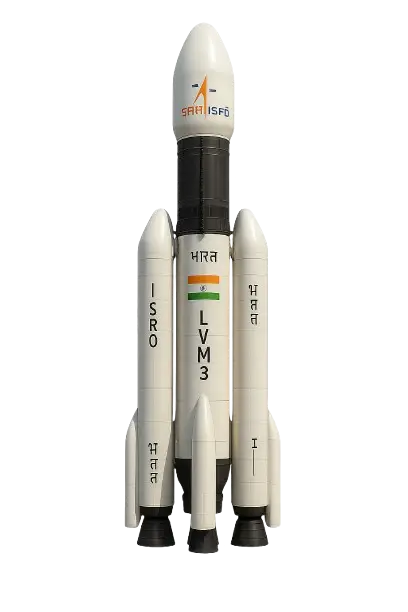
LVM-3
LVM3 is configured as a three stage vehicle with two solid strap-on motors (S200), one liquid core stage (L110) and a high thrust cryogenic upper stage (C25). The S200 solid motor is among the largest solid boosters in the world with 204 tonnes of solid propellant.
First Flight: 2017
Launchers Under Development
HRLV
RLV-TD
TD
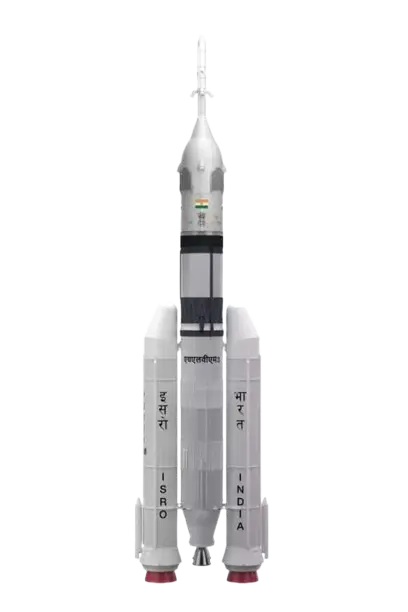
HRLV
The HRLV (Human RatedLaunch Vehicle) is one of ISRO’s most mbitious future launch vehicles.It will be capable of taking humans to space.Testing of this rocket is underway and it's first trial is scheduled for late 2025.
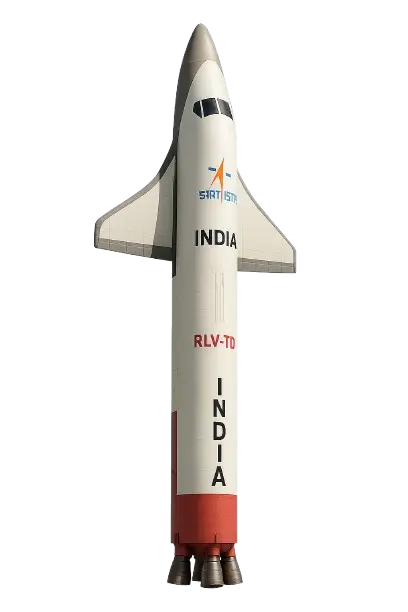
RLV-TD
The RLV-TD (Reusable Launch Vehicle – Technology Demonstrator) is India’s first attempt at creating a winged body spaceplane. It aims to demonstrate key technologies for future reusable spacecraft, including autonomous landing, reentry heat protection, and hypersonic flight.
First Flight: 2016
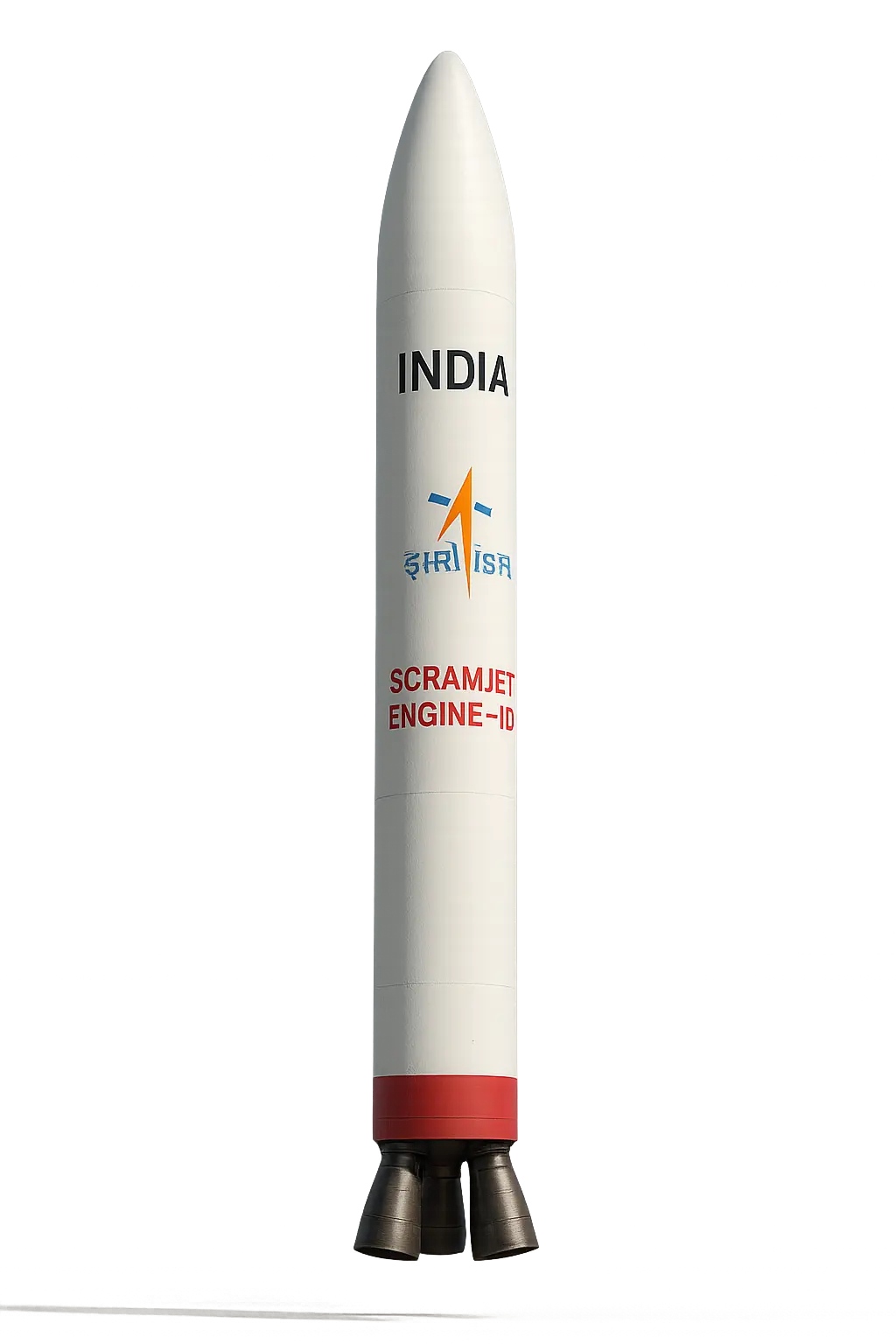
Scramjet Engine TD
The Scramjet Engine Technology Demonstrator is an experimental mission by ISRO to test air-breathing engine technology. This propulsion system uses atmospheric oxygen for combustion at hypersonic speeds, potentially enabling more efficient access to space.